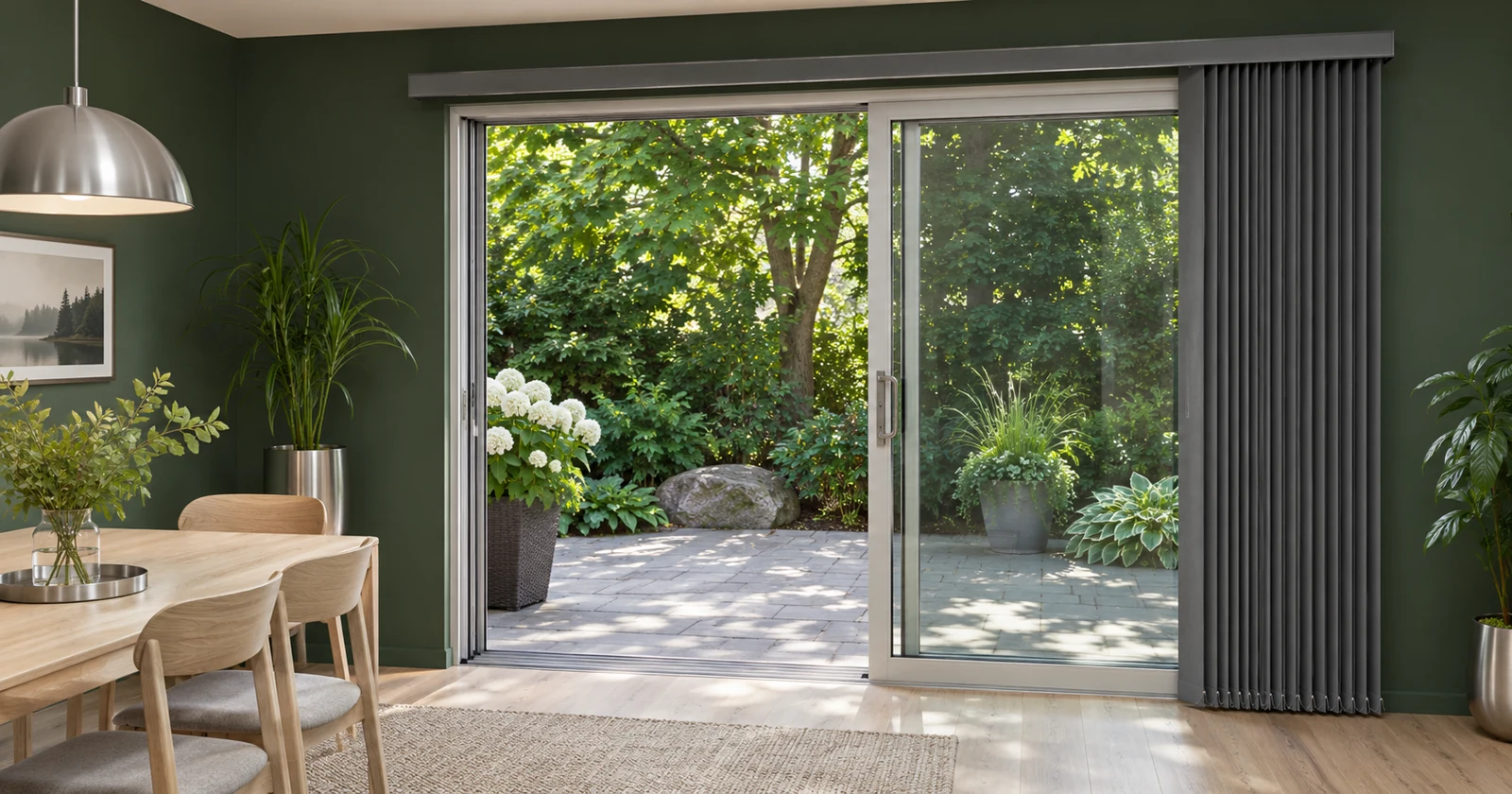
The best patio door blinds for your room need to work when the door is open as well as when the glass is covered. Start with the panel you walk through, where the covering will gather and how much room the handle needs. Then compare the look, light control and privacy you want.
If you are choosing blinds for a patio door in Riverside South or elsewhere in Ottawa, bring those everyday details into the conversation early. Randall’s sliding door solutions include several approaches, but the right configuration depends on your actual doorway and how you use it.
Start With the Door You Actually Use
Look at the door from inside the room and identify the moving panel and the opening you normally walk through. Describing a door as “left-opening” can be ambiguous, so a photo with the door partly open is more useful than that phrase alone.
Next, think through an ordinary trip outside. Do you approach from the kitchen carrying a tray? Does a dining chair sit beside the handle? Is this an occasional route to a balcony or the main way into the garden?
Those details help distinguish a covering that looks good in a closed position from one you will find convenient every day. A treatment that must be raised before each trip outside creates a different routine from one that moves sideways. Randall’s sliding-door page specifically recommends considering access patterns when comparing these approaches.
Where Will the Blinds Go When They Are Open?
The space occupied by a covering when it is gathered is often called its stack-back space. It is part of the design, not leftover space to think about after choosing a fabric.
Randall’s vertical blinds page describes one-way and split-draw configurations and recommends planning the stack away from the traffic side. Ask the consultant to show where the proposed covering would sit relative to the usable doorway, the fixed glass and the wall beside it.
A Frequently Used Garden Door
Imagine a two-panel slider where everyone uses the opening on the left when viewed from the room. Gathering the covering towards the other side may help keep that route clear. It still needs checking against the actual door, available mounting space and chosen product.
If a bookcase sits beside the fixed panel, include it in the assessment. The covering needs a workable place to gather; a photograph of the glass alone will not show the whole problem.
A Door With Access Near the Centre
Some openings make a split arrangement worth discussing. Instead of gathering everything to one end, the covering opens towards both sides. That can suit a central route, but each side needs space for its share of the covering.
Do not assume that splitting the treatment automatically leaves every part of the opening clear. Ask to see the proposed open position and confirm which parts of the doorway will remain usable.
Check the Handle, Trim and Furniture Together
Handle clearance is more than a measurement between the glass and the blind. The handle projects into the room, your hand needs to reach it, and the treatment has its own depth and movement.
Before the consultation, take a side view of the handle and a wider view showing the trim, nearby furniture and floor. Explain anything that changes during use, such as dining chairs being pulled out or a door panel sliding behind another panel.
There is no single clearance number that suits every product and door. Have the final mounting position, operating space and dimensions checked for the chosen configuration. Rough measurements help start the discussion; they should not replace the professional measurements used for an order.
Compare How Each Treatment Opens
Appearance matters, but watching the treatment move can make the choice clearer. Ask to compare both its light-control position and the position you would use for walking outside.
- Vertical blinds: the vanes rotate to adjust light and traverse sideways for access. Discuss which side they will gather on and how that fits the route through your room.
- Skyline Gliding Window Panels: broad fabric panels move along tracks and stack together. Ask how the proposed panel arrangement will look when open and how much of the doorway or adjacent glass it will occupy.
- Luminette Privacy Sheers: vertical fabric vanes sit within sheer fabric, combining adjustable light control with sideways traverse. Compare the gathered fabric and the softer appearance with a panel or conventional vertical treatment.
Randall’s also describes sliding-door shutter configurations and horizontally opening cellular shades on its sliding-door solutions page. If those appeal to you, ask the consultant to demonstrate the relevant opening arrangement and assess its clearances rather than choosing from a product name alone.
For an overview that also covers unusual window shapes, see the guide to sliding doors and specialty windows.
Plan Privacy Without Forgetting the Walkway
Think about when you want the glass covered and when you still need to go outside. An evening dinner beside the patio door may call for privacy, while someone still needs access to the garden.
Explain that combination during the consultation. Ask what you would need to open or adjust for each trip through the door, and what portion of the glass would be exposed. This is more useful than evaluating privacy and access as separate decisions.
Fabric and configuration also affect light control. If darkness is a priority, raise that requirement before selecting a treatment. A product that suits frequent daytime access is not automatically the right choice for a bedroom with a patio door.
What to Show Your Consultant
You do not need a finished design plan. A short set of photos and observations can make the visit more useful:
- A straight-on photo of the whole opening, including trim and wall space on both sides.
- A photo with the door partly open, showing the panel you use and the handle.
- A wider room view with the furniture in its normal position.
- A note about how often you use the door and whether you want daytime light, evening privacy or stronger light reduction.
- Any rough measurements you already have, clearly labelled as approximate.
Randall’s free in-home consultation includes samples, measurements and recommendations for your space, with no obligation to purchase. Use it to compare the open and closed positions before settling on a treatment.
Find a Better Fit for Your Patio Door
To plan patio door blinds around your everyday routine, contact Randall’s or call (613) 714-4906. Tell the team which door you use, where the covering could gather and what you want from the room, so they can help you compare suitable options.
Book Your Free Consultation