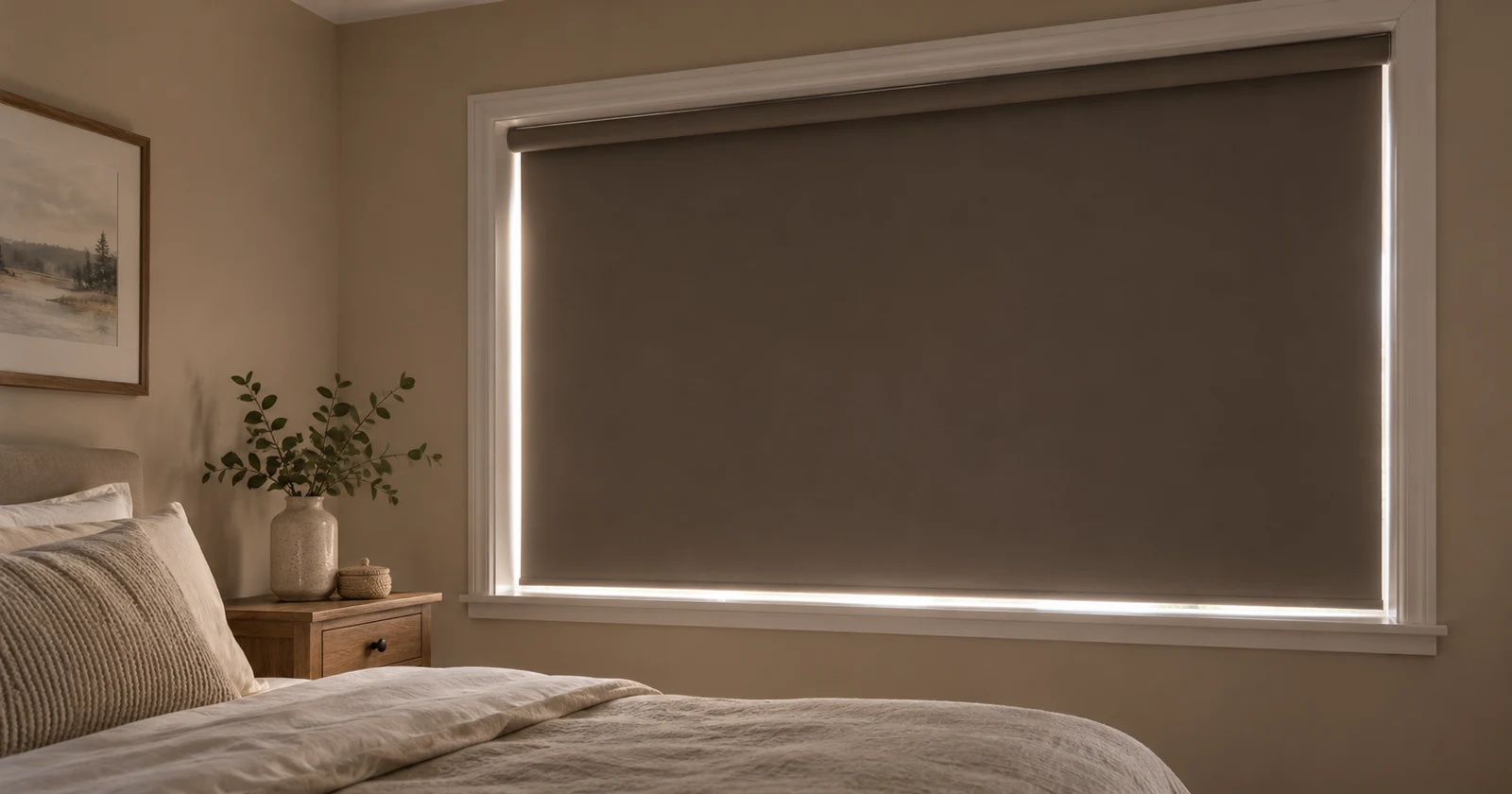
Blackout blinds can still let light into a room because light passes around the covering, even when it cannot pass through the fabric. Gaps at the sides, above the shade or along the bottom can leave a bright outline around an otherwise dark window. Reducing that light starts with finding its source, then choosing the right fabric, coverage and mounting arrangement.
If you are comparing blackout blinds in Ottawa, or wondering why your current bedroom window treatments are not dark enough, check the window before choosing a replacement. A different fabric will not necessarily fix a gap around the edges.
Where Is the Light Coming From?
Look at the window when the unwanted light is most noticeable. Lower the shade using its normal controls and turn off the room lights so you can distinguish light through the material from light around it.
| What you see | What to check | What to discuss next |
|---|---|---|
| A glow across the fabric itself | Whether the fabric is light-filtering, room-darkening or blackout | A fabric opacity that matches the darkness you want |
| Narrow strips of light down the sides | The space between the shade edges and the window opening | A compatible side-channel system or a different mounting arrangement |
| Light above the shade | The coverage around the top of the opening | How the proposed treatment will cover that area |
| A bright strip at the bottom | Whether the shade is fully lowered and how it meets the sill or opening | A measurement and fit assessment |
This check gives you a useful description of the problem. It does not establish whether the existing shade is defective or which parts will fit it.
Light Through the Fabric
Room-darkening and blackout are different specifications. Room-darkening fabric reduces light, while blackout fabric is designed to block light through the material itself. Neither term, on its own, tells you how much light can travel around the installed shade.
For example, if the centre of the shade glows in daylight, ask about its fabric specification before concentrating on edge treatments. Randall’s room-darkening and blackout solutions explain why both fabric and installation matter. The existing blackout and room-darkening guide also compares the main shade options.
Light Around the Edges
If the fabric looks dark but the window has a bright border, the next question is coverage. Choosing another blackout fabric alone will not close the space beside the shade.
Imagine a bedroom where the centre of the window is dark but a narrow line of morning light runs down each side. The useful comparison is between ways of managing those side gaps, rather than simply choosing a thicker-looking fabric. Photograph the window at that time of day so the light pattern is clear during your consultation.
How Can You Reduce Light Gaps?
The right approach depends on the window, the treatment and how dark you want the room to be. These are options to discuss, rather than interchangeable fixes for every blind.
Consider a Shade Designed With Side Channels
Randall’s offers Hunter Douglas Duette honeycomb shades with the LightLock system. Its U-shaped side channels overlap the shade edges to reduce the light that would otherwise pass around the sides.
This is a specific product system. Do not assume LightLock can be added to an unrelated roller shade or an existing blind. Ask whether the proposed Duette configuration and your window are suitable, and have the complete arrangement measured before ordering.
Compare Inside and Outside Mounting
An inside-mounted shade sits within the window opening. An outside-mounted treatment extends beyond the opening and can provide more coverage around it. Randall’s identifies outside mounting and inside mounting with light-blocking side channels as approaches to reducing unwanted light.
Ask the consultant to explain the coverage at the top, sides and bottom of your particular window. There is no single overlap measurement to prescribe here: the product, trim and available mounting space need to be considered together. An outside mount should not be treated as a promise of a completely dark room.
If you prefer the simple appearance of a roller shade, Randall’s Designer Roller Shades include blackout fabric options. Discuss the fabric and mounting arrangement together rather than choosing the fabric first and leaving edge coverage until installation.
Discuss Blackout-Lined Drapery
Another option is to discuss a second layer with Randall’s. Its custom drapery service includes blackout linings and layering over blinds or shades.
For a bedroom where you like the existing shade’s daytime appearance, drapery may be worth considering. The consultation should address whether the proposed panels will cover the areas where light enters when closed. The lining, panel coverage and placement all need to suit the intended result; adding decorative side panels alone is not the same as planning a closing layer.
What Should You Show Your Consultant?
Explain the result you want in practical terms. “I want less light around the sides at sunrise” gives a clearer starting point than “I need better blinds.”
Before a free in-home consultation, it helps to gather:
- A photo of the whole window with the shade lowered.
- A closer photo of the sides, top or bottom where light enters.
- The time of day when the problem is most noticeable.
- Any product name or fabric information you already have.
- Your preference for keeping the current look, adding drapery or comparing a replacement.
These details are helpful, not a requirement for booking. Randall’s in-home consultation includes product samples, window measurement and recommendations based on your space, with no obligation to purchase.
Choose the Fabric and Fit Together
Blackout fabric addresses light through the shade. Coverage and mounting address light around it. A useful solution considers both, especially when choosing bedroom window treatments.
Plan a Darker Bedroom
To discuss blackout blinds for your Ottawa home, contact Randall’s or call (613) 714-4906. Tell the team where the light is entering and how you use the room so they can help you compare suitable options.
Book Your Free Consultation